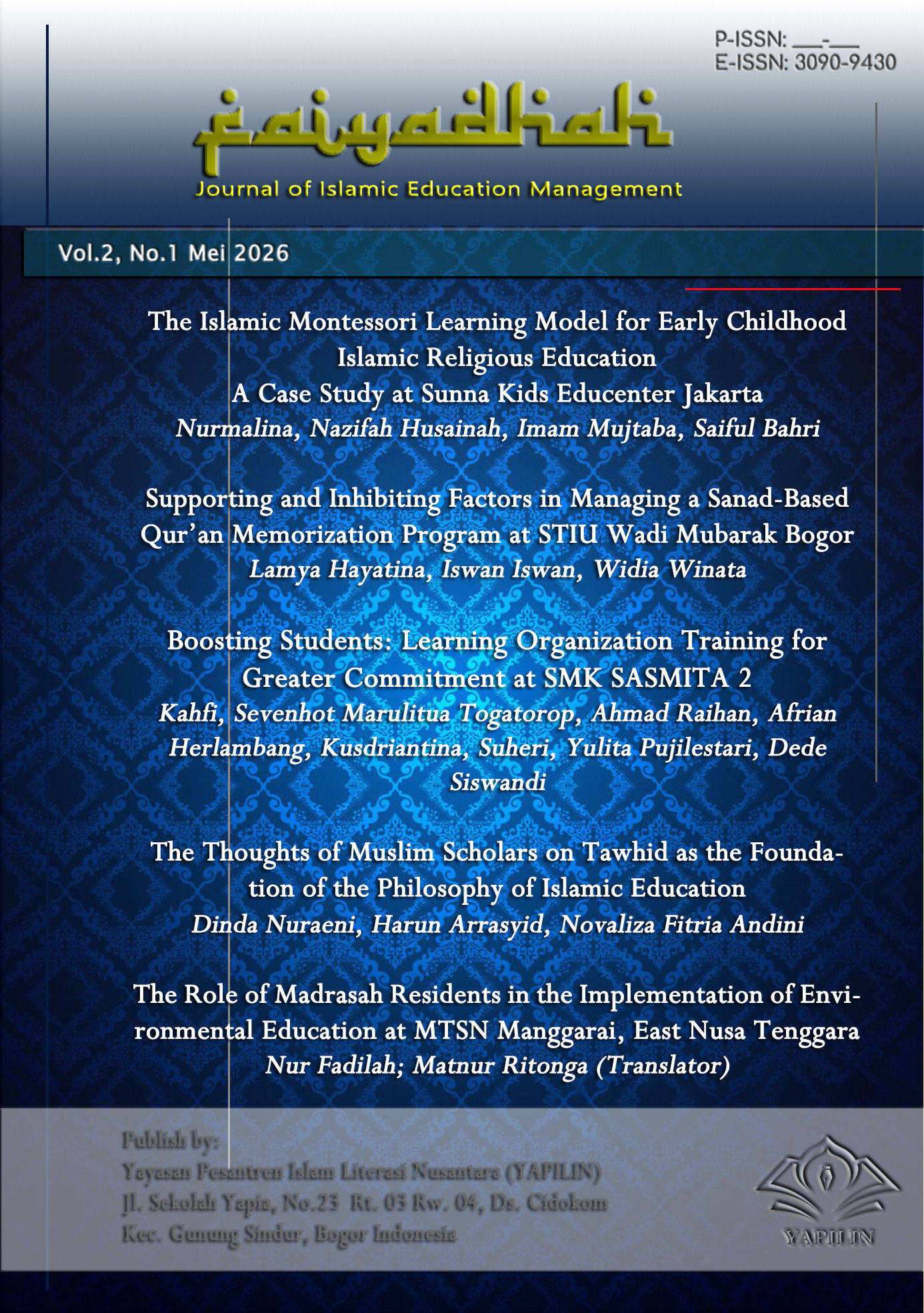
The Thoughts of Muslim Scholars on Tawhid as the Foundation of the Philosophy of Islamic Education
DOI:
https://doi.org/10.64344/fydh.v2i1.95Keywords:
monotheism, Islamic Education, Educational Philosophy, Spirituality, Morals, Integration of KnowledgeAbstract
This paper examines monotheism as the primary foundation of Islamic educational philosophy, encompassing ontological, epistemological, and axiological aspects. Ontologically, monotheism asserts that all reality originates from God, and education is always linked to the spiritual dimension. Epistemologically, monotheism combines revelation and reason as two complementary sources of knowledge. Axiologically, monotheism serves as a guide in shaping human beings with morals, ethics, and a sense of responsibility. The ideas of figures such as Al-Ghazali, Ibn Sina, and Al-Farabi demonstrate that the goal of Islamic education is to cultivate a complete human being through a balance among intellectual, spiritual, and moral dimensions. Monotheism-based education also emphasizes instilling values in daily life through role models, habituation, and the process of purifying the soul. In the context of modern education, this approach is relevant as a response to the moral crisis and materialistic tendencies by directing education toward character development, divine awareness, and devotion to God and fellow human beings.
Downloads
Published
Issue
Section
License
Copyright (c) 2026 Dinda Nuraeni, Harun Arrasyid, Novaliza Fitria Andini (Author)

This work is licensed under a Creative Commons Attribution-NonCommercial-ShareAlike 4.0 International License.